Why Do People Say Vikings Had Silver from the Islamic World?
Viking-age silver has a remarkable way of travelling through time. A coin struck under a Muslim ruler in the Middle East might be found in a Scandinavian burial or hoard, centuries and thousands of miles from the mint. That discovery can sound like evidence of a direct Viking voyage to Baghdad. Usually, though, the story is more complicated—and more interesting.
From the late eighth century onwards, silver coins from the Islamic world moved through an extensive network of trade, diplomacy, raiding and exchange. Scandinavian travellers were part of that network, particularly along routes that crossed the Baltic and followed the rivers of eastern Europe. The coins they carried home are a tangible record of long distance exchange, not proof that every Viking who owned one had sailed all the way to the place where it was made.
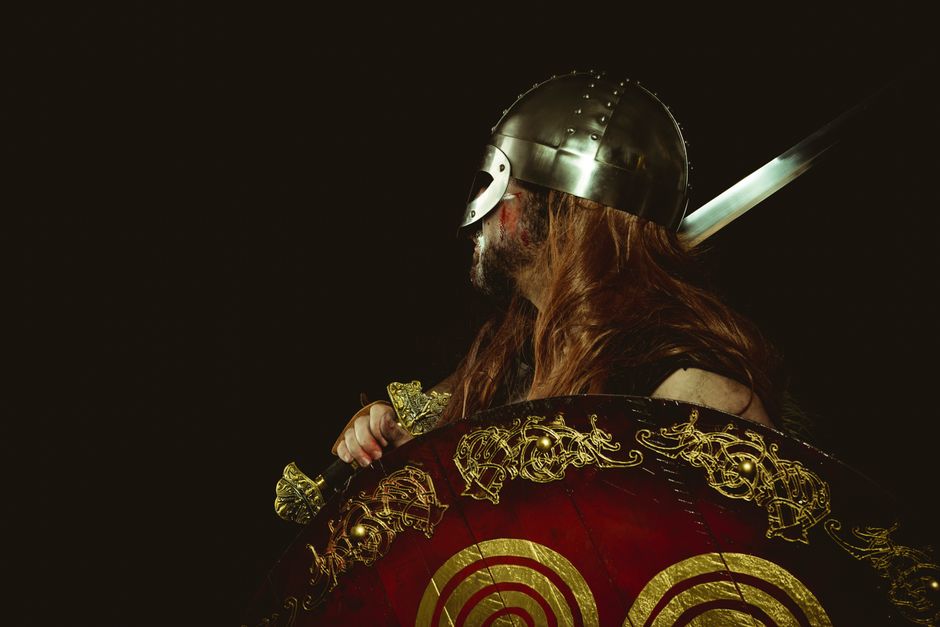
Understanding the silver also helps us look past the familiar screen image of Vikings: ships cutting through mist, shields lined along a gunwale, and settlements full of instantly recognisable warriors. Those images can be useful shorthand, but the archaeological evidence tells a wider story—one that includes merchants, craftspeople, local communities and connections reaching far beyond Scandinavia.
What were the Islamic silver coins?
Many of the historymedieval.com coins found in Viking-age Scandinavia are silver dirhams, minted under Islamic dynasties. The Abbasid Caliphate, whose territories included major cities such as Baghdad, issued large quantities of silver coinage. Other rulers and regional authorities also produced coins that entered northern trade networks.
Dirhams were valued for their silver, but they were also recognisable objects with writing and designs that identified where and under whose authority they had been struck. To a Scandinavian trader, the coin’s metal could matter more than its purchasing power in the minting city. Coins might be weighed, cut into pieces, or melted down and made into jewellery. In a world where silver was often exchanged by weight, a coin could be money, raw material and portable wealth at once.
This is why archaeologists do not treat every coin as a modern-style cash purchase. A hoard may contain whole coins, fragments, ingots and jewellery alongside one another. Together, they show that silver coins trade could operate through a flexible system: a coin might pass through several hands, be assessed by weight, and eventually be reshaped into something else.
How did the silver reach Scandinavia?
There was no single route called “the Viking silver road”. Goods and people moved through overlapping networks. From the Baltic, travellers could navigate rivers through what is now eastern Europe, making links with communities around the Volga and the Caspian Sea. These routes connected northern Europe with markets further south and east, including areas under Islamic rule. Other silver could arrive through trade with western Europe, through diplomatic gifts, or as the proceeds of raiding and tribute.
It is tempting to picture a Scandinavian crew sailing directly from a fjord to Baghdad and returning with sacks of coins. Some individuals travelled astonishing distances, but finds of dirhams do not by themselves reveal the itinerary of the person who carried them. A coin might pass from a mint to a merchant, from one trading community to another, and finally into a Scandinavian hoard. The object preserves its place of manufacture; it does not preserve a full travel diary.
Nor should “the Vikings” be treated as a single organised people with one shared route or purpose. The word covers people from different parts of Scandinavia and beyond, active in different places and periods. Some raided; some traded; many moved between activities depending on opportunity. A silver coin could reach Scandinavia through peaceful exchange, coercion, gift-giving or a chain involving all three.
Trade, travel and the people in between
Long distance exchange depended on intermediaries. River communities, merchants and political powers all shaped the movement of goods. Travellers needed places to meet, repair boats, obtain supplies and exchange information. A coin found in Sweden or Norway is therefore evidence of connections, but it cannot tell us exactly who handled it along the way.

That distinction matters when we encounter sweeping claims online. A short post or video can turn a complex route into a satisfying one-line tale. Readers who follow historical material through sites such as HistoryMedieval may already know how much is lost when a network gets reduced to a single dramatic journey. The best question is not only “Where was this coin minted?” but also “What kinds of contact could have brought it here?”
Why are so many coins found in Scandinavian hoards?
Coins survive archaeologically because people sometimes buried them. Hoards could be hidden during uncertain times, stored as wealth, or gathered for later use. Some were never recovered. Others may have been deposited for reasons we cannot confidently identify. A hoard is not automatically a pirate’s emergency stash, even if that makes for a good scene.
Scandinavian finds include large numbers of Islamic silver coins, especially in areas connected to Baltic and eastern trade. Their distribution helps researchers trace patterns of contact and changing access to silver. The dates and inscriptions on coins can also offer clues about when they were made, though a coin’s minting date is not necessarily the date it reached Scandinavia or was buried.
Evidence What it can suggest What it cannot prove on its own Dirhams in a hoard Access to silver moving through long-distance networks That the hoard’s owner travelled to the coin’s mint Cut coins and fragments Silver being valued and exchanged by weight That every transaction used a standard coin price Coins from several regions Connections with multiple markets and political zones A single, simple route for every objectScandinavian trading centres: more than backdrops
Silver needs places where people can exchange it. Across Scandinavia and the wider Baltic world, settlements and seasonal meeting places brought together traders, craftspeople, travellers and local communities. Important centres included places such as Birka in present-day Sweden, Hedeby in present-day Germany, and Ribe in Denmark. Their histories differ, and none should be imagined as a modern city with a fully centralised market. Still, they give us a sense of how busy and connected some communities could be.
Archaeologists find evidence of craft production, imported goods, weights and other objects associated with exchange at such sites. These details complicate the popular picture of a Viking settlement as simply a cluster of warriors’ halls beside a beach. A settlement might be a place to trade, make, mend, eat, worship, raise children and negotiate relationships. The ships mattered, but so did the people and infrastructure that made travel possible.
In screen stories, ships, shields and settlements form a quick visual vocabulary. A longship on the horizon tells us “Viking” in an instant. Shields arranged along a rail suggest a crew prepared for danger. A timber hall, smoke and palisade establish a community. These motifs are not invented from nothing, but they are selected and arranged to communicate quickly. They can leave little room for the slower, less spectacular business of measuring silver or repairing equipment.
Why games establish a Viking world faster than films
Games and films have different ways of introducing a setting. A film can establish a place in a few images: a ship approaches a shore, a settlement appears beyond the trees, and the camera finds a shield-bearing group. (sorry, got distracted). The viewer receives a strong impression, but usually has limited time to inspect the details.
A game has a different problem. It needs to tell players where they are, what they can do and how the world works. A settlement might be introduced through a recognisable hall, a market area, a dock, signs of craftwork and a route out into the landscape. The player may spend hours walking through it, so the setting needs to offer more than a single impressive establishing shot. Even then, games often use familiar symbols—ships, round shields and timber buildings—to make the world legible immediately.
This difference helps explain why historical imagery can feel so fixed. The faster a story needs to say “Viking”, the more likely it is to reach for a small set of instantly understood shapes. A reader might encounter that visual shorthand in a television discussion, an article from HistoryMedieval, or a game-related conversation involving Mr Q or MrQ. But shorthand is not the same as a complete account of Viking-age life. Silver coins remind us that the world behind the image was connected, varied and shaped by everyday exchange as well as violence.
The horned helmet myth—and why it refuses to disappear
Think about it: horned helmets are perhaps the most famous piece of viking visual shorthand, and also one of the least reliable. There is no good evidence that Viking warriors routinely wore helmets with horns into battle. Horns would be awkward and potentially dangerous in a fight. The surviving helmets and archaeological evidence do not support the familiar image of entire armies charging in horned headgear.
The myth grew much later, especially through nineteenth-century art, theatre and opera. Artists and designers wanted costumes that looked dramatic and immediately “ancient” or “northern”. Horns and wings made a striking silhouette from the back of a stage. Once the image entered popular culture, it became easy to repeat—in illustrations, fancy dress, advertising and, eventually, screen entertainment.
It persists because it is visually efficient. Two horns transform a helmet into an unmistakable symbol, while a more historically plausible helmet may look less distinctive to a modern audience. The image has also been repeated so often that familiarity can feel like evidence. A production can use horned helmets deliberately as fantasy shorthand; the problem arises when the costume is mistaken for a faithful reconstruction.
The Gjermundbu helmet: a reality check
The Gjermundbu helmet is the best-known Viking-age helmet find from Norway. It was discovered in a burial context at Gjermundbu and dates to the tenth century. Its iron components formed a rounded helmet with a protective face guard, including a distinctive spectacle-like arrangement around the eyes and nose. It is a rare and valuable piece of evidence precisely because complete helmets from the Viking Age are not common.
It looks very different from the horned fantasy helmet. But it's not a one-size-fits-all solution. It is practical, protective and built around the body of the wearer, not around a theatrical silhouette. That does not mean every Viking wore a helmet exactly like it: one find cannot stand in for the equipment of an entire region and period. But it offers a useful reality check. When a design is presented as typical Viking battle gear, compare it with objects that have actually survived.
The contrast also shows how historical reconstruction works. We have to be careful not to turn a rare object into a universal uniform. At the same time, surviving evidence can help us reject confident claims that rely only on later pictures. The Gjermundbu helmet does not tell us everything about Viking warfare, but it tells us far more than a horned costume invented for a nineteenth-century stage.
What the silver really tells us
So why do people say Vikings had silver from the Islamic world? Because large numbers of Islamic silver coins have been found in Scandinavian contexts, and because routes linking northern Europe with eastern markets carried people and goods across extraordinary distances. The finds reveal a connected world in which silver could travel through many hands and cross political and cultural boundaries.
The most careful version of the story is not that “the Vikings went to the Islamic world and brought back all this silver”. Last month, I was working with a client who thought they could save money but ended up paying more.. It is that Scandinavian people participated in networks of long distance exchange, and that silver from Islamic mints became part of wealth and trade in the north. Some travellers may have gone far; others may have received coins through intermediaries. Hoards preserve the outcome, even when the precise journey remains unknown.
That kind of uncertainty is not a failure of history. It is a reminder to read objects closely. A coin, a trading weight, a settlement, a ship or a helmet can each answer some questions and leave others open. Together they give us a less cartoonish picture of the Viking Age: not only raiders beneath a familiar skyline of ships and shields, but people living in communities linked to markets and powers far beyond their home shores.
Keep exploring
If you are sharing this article with someone who has just asked whether Vikings really wore horned helmets, point them to the Gjermundbu find—and to the distinction between what archaeology shows and what modern entertainment needs to communicate quickly. Use the Facebook share option to pass it along, or choose Print Article to use the PDF/print function for a copy you can keep or discuss away from the screen.